
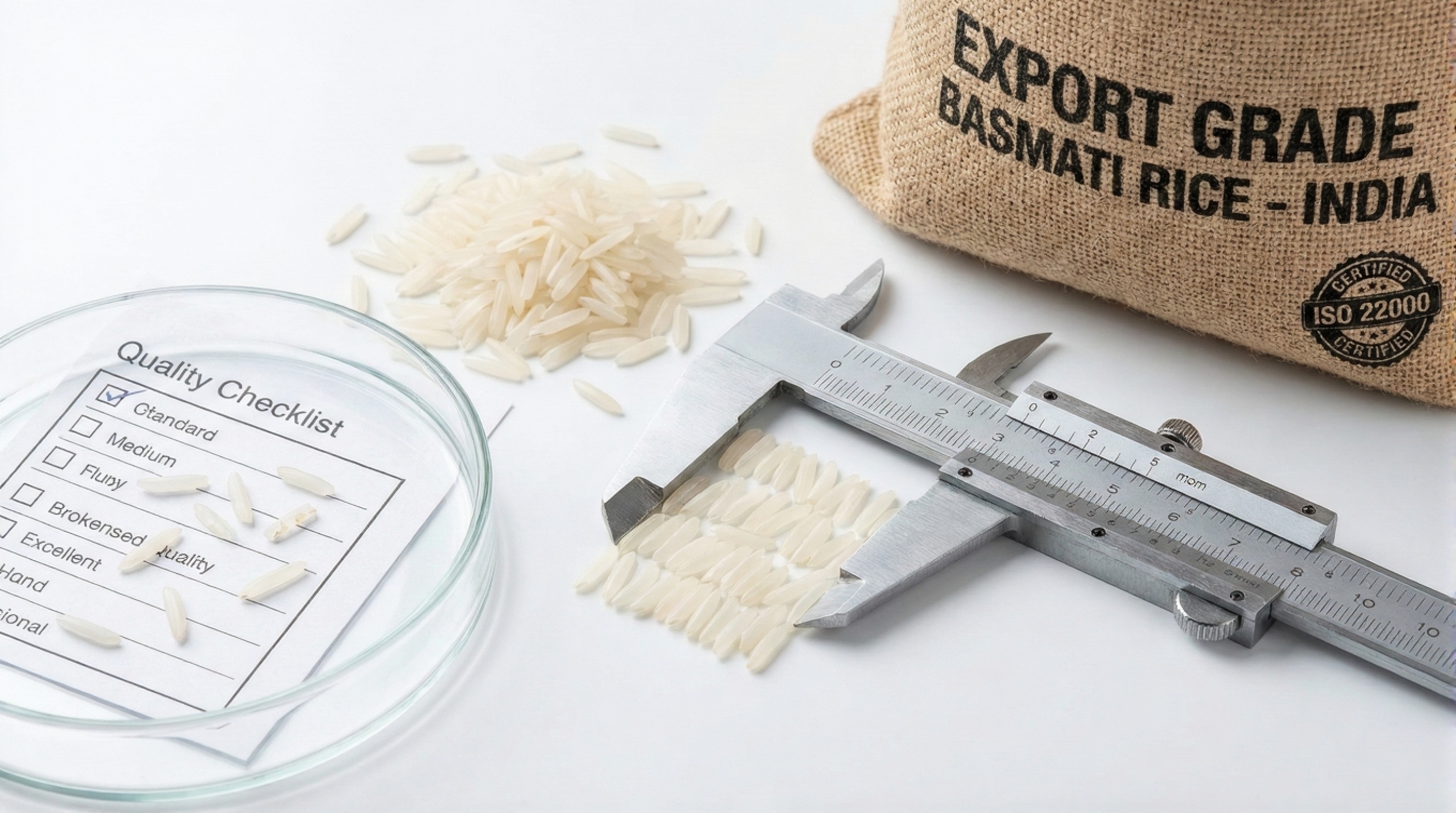
For international rice importers, 'export quality' is a term used frequently, but what does it actually mean for Basmati rice? It refers to a set of measurable standards that guarantee a premium product. Understanding these metrics is key to sourcing high-quality Basmati rice.
The Critical Metrics for Export Quality
- Average Grain Length (AGL): This is paramount. For premium varieties like 1121, the pre-cooked AGL should be 8.0mm or more. After cooking, it should elongate to at least double its size.
- Broken Percentage: This is the percentage of broken grains in a batch. The top grade is 0-2% broken. Standard export quality is typically 5% broken. Anything higher is considered a lower grade.
- Moisture Content: The ideal moisture level is 12-13%. Higher moisture can lead to spoilage and clumping, while lower can make the grains brittle.
- Aging: Premium Basmati is aged for at least 12-18 months. This process reduces moisture, resulting in a fluffier, less sticky rice when cooked, and enhances its distinct aroma.
- Purity and Foreign Matter: Export-quality rice must be free from dust, stones, and other foreign particles. A purity level of 95% is a common standard.
At VB Exports, every container of Basmati rice is shipped with a third-party inspection report verifying these key metrics, ensuring you receive exactly the quality you paid for.

